
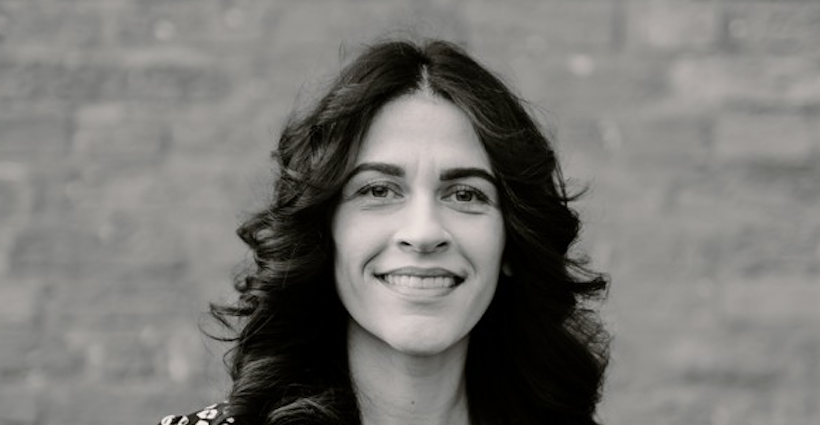
Sophie Kang, Sales and Marketing Manager at Sign Solutions, says AI has the potential to help BSL signers, but only if it’s developed with their input
In April, the British Deaf Association (BDA) published a discussion paper on the potential uses of AI and British Sign Language (BSL). It said that while AI could improve accessibility for BSL users, it warned it also poses risks to the Deaf community.
Watch a translation of this article in BSL or scroll down to continue in English:
On the face of it, anything that improves the amount of information available in BSL is a good thing as there are not enough qualified BSL interpreters to facilitate every interaction with a Deaf person. The Deaf community and its advocates have long been arguing for a greater presence of BSL in society and this is something that has been slowly – many would say too slowly – improving since the BSL Act came into force in 2022.
But as the BDA has highlighted in its discussion paper, BSL users must play a significant role in the development of this AI if it’s to be useful to the Deaf community and contribute to putting BSL into places of society where it has never been seen before. It was unfortunate to read in the paper that: “Developers rarely involve Deaf signers appropriately, if at all, in their work, and rarely understand the complexity of BSL.”
As an organisation providing services to enable Deaf and hearing people to communicate since 1998, we have come to realise that there is a tendency for those outside the Deaf community to think of BSL as simply a signed version of English, whereas it’s an entirely different language with its own grammar, syntax and structure.
Without Deaf people involved in the development of AI models, the risk of such models not providing a quality pre-recorded translation is extremely high.
Real-time risks
The BDA’s discussion paper points out that the two main uses envisaged for AI are translations of pre-recorded material and real-time interpretation.
With the proper quality assurance checks and involvement from BSL users, the use of AI for accessing information that has not previously been made available in BSL pre-recorded material could go a long way to improving the lives of those in the Deaf community. The lack of content currently available in BSL throws up hurdles the hearing community simply cannot imagine.
I was recently at an event where a Deaf man spoke of the challenges Deaf people faced in taking the theory test for a driver’s licence. He recalled a recent study where 80 Deaf people took the test, but only 12 passed because the questions were in written English and there was no offer of receiving the questions in a BSL translation.
A situation like this could be markedly improved with more pre-recorded translations and if AI proves accurate and could help accelerate this, it would mean fewer Deaf people face a barrier in taking their theory test because the questions are not in an accessible format.
This is just one example of how translations using AI could help; although AI is still in its early stages, we consider that there are a number of areas it could be employed now that would dramatically improve the lives of Deaf people, for example, in industries such as travel and retail.
When it comes to real-time interpreting, the potential is currently less clear. Given the acknowledged shortage of BSL interpreters, it isn’t unreasonable that some may think AI interpretation could alleviate the pressures on a stretched talent pool.
I have personally heard many horror stories over the years about the Deaf community being failed when it comes to their communication needs. A child having to interpret for a parent being diagnosed with cancer is among the more shocking. But would such a situation be improved by an AI model being the bearer of bad news?
Human interpreters pick up on all sorts of visual cues, as well as social and cultural nuances, and adapt their communication style to take these into account. It seems unlikely AI could ever do that, and even if it could, it may be inappropriate for such important discussions to take place using AI instead of humans.
And could AI grasp the complexities of regional variations in sign language, or read facial expressions and take into account idiosyncratic signing? Right now, the answer to these questions is no, so while there’s potential AI could improve the lives of Deaf people, there are still clear limitations. Overall, there’s still a significant journey ahead for such models.
Sophie Kang is the Sales and Marketing Manager at Sign Solutions.
Enjoying our eggs? Support The Limping Chicken:

The Limping Chicken is the world's most popular Deaf blog, and is edited by Deaf writer and photographer Charlie Swinbourne.
Our posts represent the opinions of blog authors, they do not represent the site's views or those of the site's editor. Posting a blog does not imply agreement with a blog's content. Read our disclaimer here and read our privacy policy here.
Find out how to write for us by clicking here, and how to follow us by clicking here.
This site exists thanks to our supporters. Check them out below:
- Lumo TV: TV programmes in BSL for the Deaf community
- Bellman & Symfon: home alerting solutions, including the mobile phone transceiver!
- SignVideo: Instant BSL video interpreting online
- British Deaf Association: Working to transform the way BSL is accessed in the UK
- 999 BSL: call 999 in an emergency, in BSL
- Deaf Umbrella: Making colleges and workplaces more accessible
- Appa: Looking for RSLIs, TSLIs and CSWs, apply here!
- Signly: Adding BSL to websites
- Signworld: Learn BSL online!
- DCAL: world-class research into deafness, cognition and language
- Lipspeaker UK: specialist lipspeaking support
- BID: Deaf services, including advice and support, interpreting, employment and letters
- Interpreting Matters: BSL interpreting agency
- Sign Solutions: Instant access to Interpreters, training and BSL translation nationwide
- InterpretersLive: On demand BSL video interpretation
- Performance Interpreting: BSL interpreting at concerts
- National Deaf Children's Society: The leading charity for deaf children
- Action Deafness: “A Deaf-Led Charity” – interpreting & community support services





Matt Kirby
June 10, 2025
BSL is now on the driving theory test – and it’s made by real, qualified Deaf people. A big step forward for fairness and access!
Matt