
The European Union of the Deaf (EUD) has shared three new documents about AI and sign language:
- A guide with 15 rules for how AI should be made with sign languages.
- A contract to protect translators, so they get consent, fair pay, and respect.
- A book that explains the law, culture, and human rights around AI and sign languages.
Why should people care about this? If you’re like me, you know something about AI. Maybe from chatbots, Google Translate, or voice assistants. Some people have seen AI in sign language. But most people do not know the risks.
AI is not the same as a human interpreter or translator. A human interpreter or translator is registered. They follow a code of conduct. If they make a mistake, you can complain. There is a process. Something happens. With AI? No.
What should we know?
AI is not always bad. It can be helpful. It can make information more accessible and quickly. But AI is not safe without rules.
The problem is not just the technology. The problem is people who build it. People who think their AI is always right. People who do not listen when deaf people say “this is wrong.”
Think about the Post Office scandal. Technology errors hurt many people. Some went to prison. Some lost their lives. The worst problem was leaders who said the tech was perfect. It was not.
The same can happen with AI and sign language.
Why should we care?
Because this is about our lives. Our safety. Our jobs. Our culture.
What if someone makes a “digital twin” of a deaf translator? What if that twin signs “Invest in Bitcoin” and people lose money? Who is responsible? What if bad translation damages the translator’s reputation? Who will fix it or pay damages? Right now — nobody.
What do we need?
UK sign language translators need a framework that gives them:
- Consent – we agree before our data is used.
- Ownership – our language and image belong to us and we get paid properly for it being used.
- Accountability – someone takes responsibility if it’s wrong.
- Agency – deaf people lead, not just watch.
- Safety – translations must not cause harm.
- Transparent Data – we know where training data comes from.
Signly call this COAAST for short.
Deaf people, deaf organisations and RSLTs must lead. AI should support us, not replace us. We must approve translations before they go public. We must keep control.
The future of AI in sign language must be built on trust, clear rules, and deaf leadership. Anything less is unsafe.
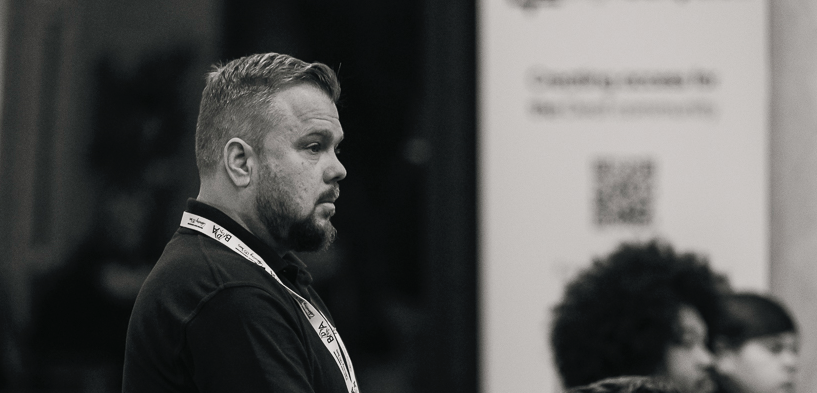
Matt Kirby is an actor, writer, translator, and CEO designate of Signly. As an actor, he hashave appeared in Four Deaf Yorkshiremen, Hands Solo, and Deaf Funny.
Photograph by Charlie Swinbourne
Enjoying our eggs? Support The Limping Chicken:

The Limping Chicken is the world's most popular Deaf blog, and is edited by Deaf writer and photographer Charlie Swinbourne.
Our posts represent the opinions of blog authors, they do not represent the site's views or those of the site's editor. Posting a blog does not imply agreement with a blog's content. Read our disclaimer here and read our privacy policy here.
Find out how to write for us by clicking here, and how to follow us by clicking here.
This site exists thanks to our supporters. Check them out below:
- Lumo TV: TV programmes in BSL for the Deaf community
- Bellman & Symfon: home alerting solutions, including the mobile phone transceiver!
- SignVideo: Instant BSL video interpreting online
- British Deaf Association: Working to transform the way BSL is accessed in the UK
- 999 BSL: call 999 in an emergency, in BSL
- Deaf Umbrella: Making colleges and workplaces more accessible
- Appa: Looking for RSLIs, TSLIs and CSWs, apply here!
- Signly: Adding BSL to websites
- Signworld: Learn BSL online!
- DCAL: world-class research into deafness, cognition and language
- Lipspeaker UK: specialist lipspeaking support
- BID: Deaf services, including advice and support, interpreting, employment and letters
- Interpreting Matters: BSL interpreting agency
- Sign Solutions: Instant access to Interpreters, training and BSL translation nationwide
- InterpretersLive: On demand BSL video interpretation
- Performance Interpreting: BSL interpreting at concerts
- National Deaf Children's Society: The leading charity for deaf children
- Action Deafness: “A Deaf-Led Charity” – interpreting & community support services





Posted on September 19, 2025 by Editor