
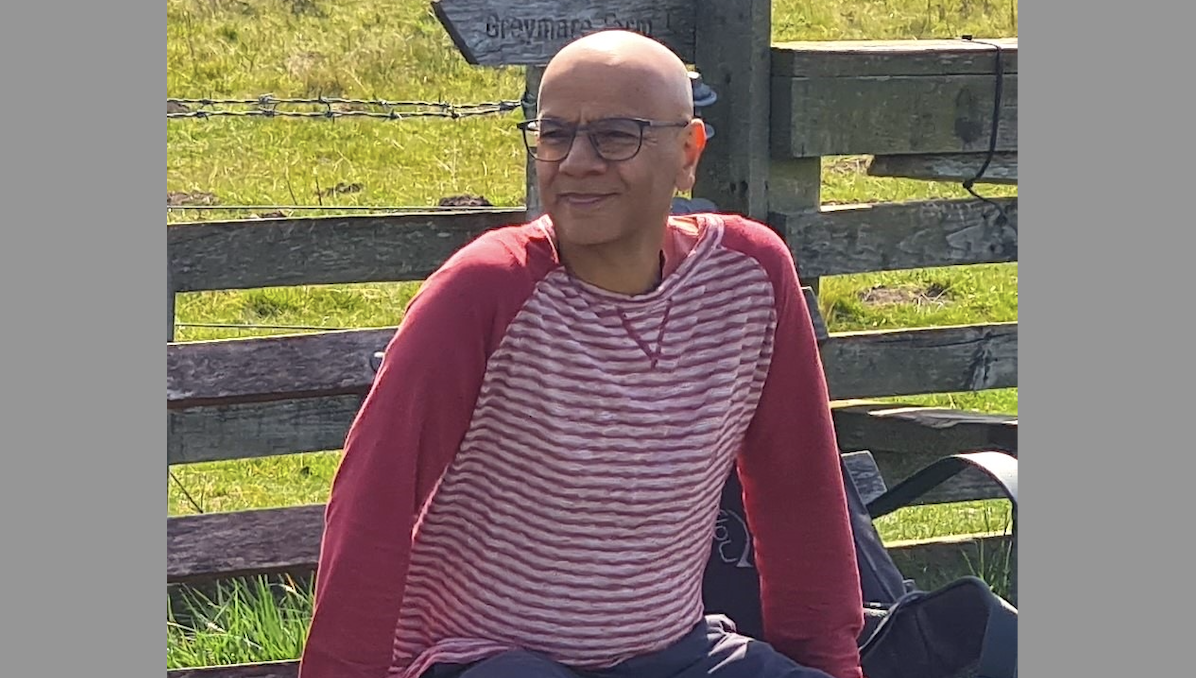
My name is Michael Fellowes and I’m the author of Scarlet and the White.
I became severely deaf through meningitis at the age of fifteen and went to Mary Hare school to do my A levels. As an adult I lost the rest of my hearing and spent four years profoundly deaf where I learnt sign language (more SSE than BSL) and had a cochlear implant operation.
I struggled through inaccessible Universities to get a BA and MA in English literature. I live near Edinburgh but I’ve lived and worked in disability and D/deaf arts across much of England. I run my deaf, disability and mental health training company – Sunsurfer Consultancy.
I’ve written for most of my life but I didn’t complete anything for publication. In 2016 I joined writing group Manchester Speculative Fiction and my short story Warbaby was published in the Revolutions 2 anthology.
I’m a fantasy and science fiction (F&SF) writer and I’m influenced by writers such as JRR Tolkien – Lord of the Rings. George RR Martin – Game of Thrones, and Andy Weir – The Martian.
With writing, I love the joy of immersing yourself in a different world with different characters and then bringing that world and those characters to life for other people. Writing that first draft, when you are alone in your room, imagining your story is amazing.
Being deaf helps me to write in a more visual way, it also helps with other senses like smell and touch/vibration. My life experiences influence my writing, I understand the sensuality of sound and how a character in my book, Scarlet, misses that sensuality (for example the sound of a wet dog shaking itself) and her music when she becomes deaf.
My commitment to inclusion means I try to write clearly and be easy to read. Like any writer I had to learn the craft of writing fiction. Scarlet and the White took fourteen drafts (re-writes) plus professional editing and input from other writers.
The publishing industry is not designed for deaf people. Schmoozing (networking) at literary festivals in the hope of getting an agent and publisher is not possible for me. But with technology and new ways of working it is becoming easier.
After the Covid lockdown, people and organisations were often flexible about online meetings. Using Zoom or Microsoft Teams with automatic captions and being able to hear/lipread means I often get enough to manage, or I book an interpreter.
It’s not easy, organisations are often casually inaccessible with no concerns about abiding by the Equality Act 2010. On many occasions I’ve asked for ‘reasonable adjustments’ for a writing course or a SFF festival such as captions on videos or automatic captions and been told “sorry, we can’t do this.”
I try to not get angry, to focus on the book that I’m writing. The book and the quality of the writing is more important than the writing and publishing industry. I’m grateful to be longlisted for the Morley Prize.
The story for Scarlet and the White developed in 2016. I imagined a big shambling Black boy who prefers classical music to rap, he’s neurodiverse and doesn’t understand how to fit in with society’s social camouflage. I loved the remoteness of the Antarctic, The Thing by director John Carpenter and the fear, isolation and paranoia experienced by the researchers.

I wanted to tell you Scarlet’s story, she’s privileged, rich and hearing but all that goes smash when she loses her hearing due to meningitis.
Through the story, Scarlet is going through the process of learning and accepting her deaf identity. She is learning that she has a right for her needs to be met and her self-esteem rising as she realises that she contributes to the expedition.
I hope readers find it an exciting story of two teenagers, trapped alone on a secret Antarctic expedition. I also hope you feel for Marvin and Scarlet as they come together when everything crashes around them.
The writing process for the book was long. So many days I wrote at 6am in the morning for an hour before I went to work. There were so many drafts too – for example, a notebook I bought last year had 177 fixes/changes in it!
For publishing, I sent the novel to agents and publishers with good feedback but it did not easily fit into the Young Adult category. A professional editor and book designer were vital. Scarlet and the White is self-published by Sunsurfer Consultancy, feedback on Amazon is excellent with an average 4.7* rating.
I’m now developing a new novel that is science fiction and fantasy and my advice to other budding writers is this – don’t be discouraged, stick at it. Be realistic that it will take time to learn how to write.
The average earnings for a professional writer is £7,000 – you’ll earn more than that on a minimum wage job three days a week! Unless you’re hugely successful, it’s best to consider it a hobby or a supplement to income not a replacement.
If you’ve got a story to tell – write it. Learn the craft of writing. Listen to feedback but use your own judgment. Good luck!
Scarlet and the White is available on Amazon in eBook and paperback formats
Enjoying our eggs? Support The Limping Chicken:

The Limping Chicken is the world's most popular Deaf blog, and is edited by Deaf writer and photographer Charlie Swinbourne.
Our posts represent the opinions of blog authors, they do not represent the site's views or those of the site's editor. Posting a blog does not imply agreement with a blog's content. Read our disclaimer here and read our privacy policy here.
Find out how to write for us by clicking here, and how to follow us by clicking here.
This site exists thanks to our supporters. Check them out below:
- Lumo TV: TV programmes in BSL for the Deaf community
- Bellman & Symfon: home alerting solutions, including the mobile phone transceiver!
- SignVideo: Instant BSL video interpreting online
- British Deaf Association: Working to transform the way BSL is accessed in the UK
- 999 BSL: call 999 in an emergency, in BSL
- Deaf Umbrella: Making colleges and workplaces more accessible
- Appa: Looking for RSLIs, TSLIs and CSWs, apply here!
- Signly: Adding BSL to websites
- Signworld: Learn BSL online!
- DCAL: world-class research into deafness, cognition and language
- Lipspeaker UK: specialist lipspeaking support
- BID: Deaf services, including advice and support, interpreting, employment and letters
- Interpreting Matters: BSL interpreting agency
- Sign Solutions: Instant access to Interpreters, training and BSL translation nationwide
- InterpretersLive: On demand BSL video interpretation
- Performance Interpreting: BSL interpreting at concerts
- National Deaf Children's Society: The leading charity for deaf children
- Action Deafness: “A Deaf-Led Charity” – interpreting & community support services




Posted on February 24, 2026 by Rebecca A Withey