
I have worked as a creative artist for more than 15 years, across different mediums and in a variety of roles. Over that time, I have built up a wealth of experience, developed my skills and learned how to adapt to all sorts of creative environments.
Something I have noticed more and more recently, particularly through my self-employed work, is the number of creative projects that specifically require a Deaf person or a native BSL user to be involved.
It might be a film, a video project, an exhibition, an immersive experience or a curated arts project. On the surface, this sounds positive. Deaf people are being included, our experiences are being recognised and there appears to be a genuine desire to make creative work more representative.
But I have started to wonder whether, sometimes, we are being included because we are genuinely valued as creatives, or simply because the project needs to demonstrate that a Deaf person was involved.
Recently, I worked with a filmmaker who was developing an immersive experience for audiences in a gallery. One of the commissioning criteria was that they had to work alongside a native Deaf BSL user, so I was brought onto the project.
Initially, I was really excited. I had lots of ideas and was looking forward to bringing my own creative experience and perspective to the work. However, it quickly became apparent that I was not really being treated as an equal creative partner.
It was their creative vision, their rules and, ultimately, their decisions. Whenever I suggested something, I would hear responses along the lines of, “I think it’s more about…” or, “I think it should be…”
When I tried to explain something from a Deaf perspective, I was sometimes met with the response that they had read a lot about diversity, and therefore thought something should be done differently.
The more this happened, the more I started to feel like a token Deaf person rather than a fellow artist.
At first, I questioned myself. Perhaps I was being too sensitive. Perhaps I should simply be grateful to be involved in such a large, mainstream project. After all, opportunities like this do not come along every day.
But the feeling did not go away. I began to realise that being invited into a project is not the same as being listened to within it.
I spoke to other people involved with the gallery and the wider creative process, and it became apparent that the major creative decisions were being made by hearing people. There were no Deaf or native BSL users within the main creative decision-making team.
That made me ask a very simple question: how is that genuine Deaf involvement?
It reminded me of another arts project I worked on involving a group of school academies. A hearing person who knew BSL had been employed as a consultant, while I was brought in as the “real-life Deaf person”.
I was asked to create promotional videos and share BSL content through my networks, effectively becoming the face of the project.
Yet I had no real creative power or decision-making role. I was underneath the hearing consultant rather than working alongside them as an equal.
My name, my experience and my Deafness were useful to the project, but my creative voice was not given the same value.
I am sharing this because I think it is important for other Deaf creatives and artists to hear this: you do not have to settle for being the quiet participant simply because you are grateful to be involved.
You can ask questions. You can challenge decisions. You can bring your own ideas to the table. You can expect your creative experience to be valued.
Most importantly, you do not have to accept being used as a tick box just because you are being paid.
And this message is also for the people commissioning creative work.
If your project involves Deaf people or BSL users, please do not automatically assume that you need a hearing person to lead it while bringing Deaf people in around the edges.
There are experienced Deaf artists, filmmakers, performers, writers, consultants, directors and creatives who can lead projects themselves.
Hire them directly.
Do not simply use their name, their networks or their lived experience to strengthen an application for funding and then ignore their ideas once the money has been secured.
If you have specifically been asked to involve a Deaf person as part of your commissioning or funding criteria, that person should not become a decorative addition to the project.
There do seem to be more creative projects being funded that involve Deaf people and BSL, particularly within the arts. That is something I genuinely welcome.
But Deaf involvement needs to mean more than having a Deaf person somewhere in the credits, appearing in a promotional video or providing a stamp of approval.
We deserve to be part of the conversations where the important decisions are made. We deserve to have our creative ideas heard. We deserve to be trusted for our professional expertise, not just our lived experience.
And we deserve to lead.
So to my fellow Deaf creatives, I would say this: do not make yourself smaller just to fit into somebody else’s project. Your experience is valuable, but so is your creativity, your skill and your ability to lead.
And to those commissioning the work, look beyond the tick box.
If you want Deaf people to be part of your creative vision, give them the opportunity to shape that vision too.
Don’t just involve Deaf creatives. Let them lead.
This blog has been shared anonymously as part of the Insight series – created by Assistant editor Rebecca A Withey.
If you have a story, experience or viewpoint you would like to anonymously share please email Rebecca on rebecca@rawithey.com
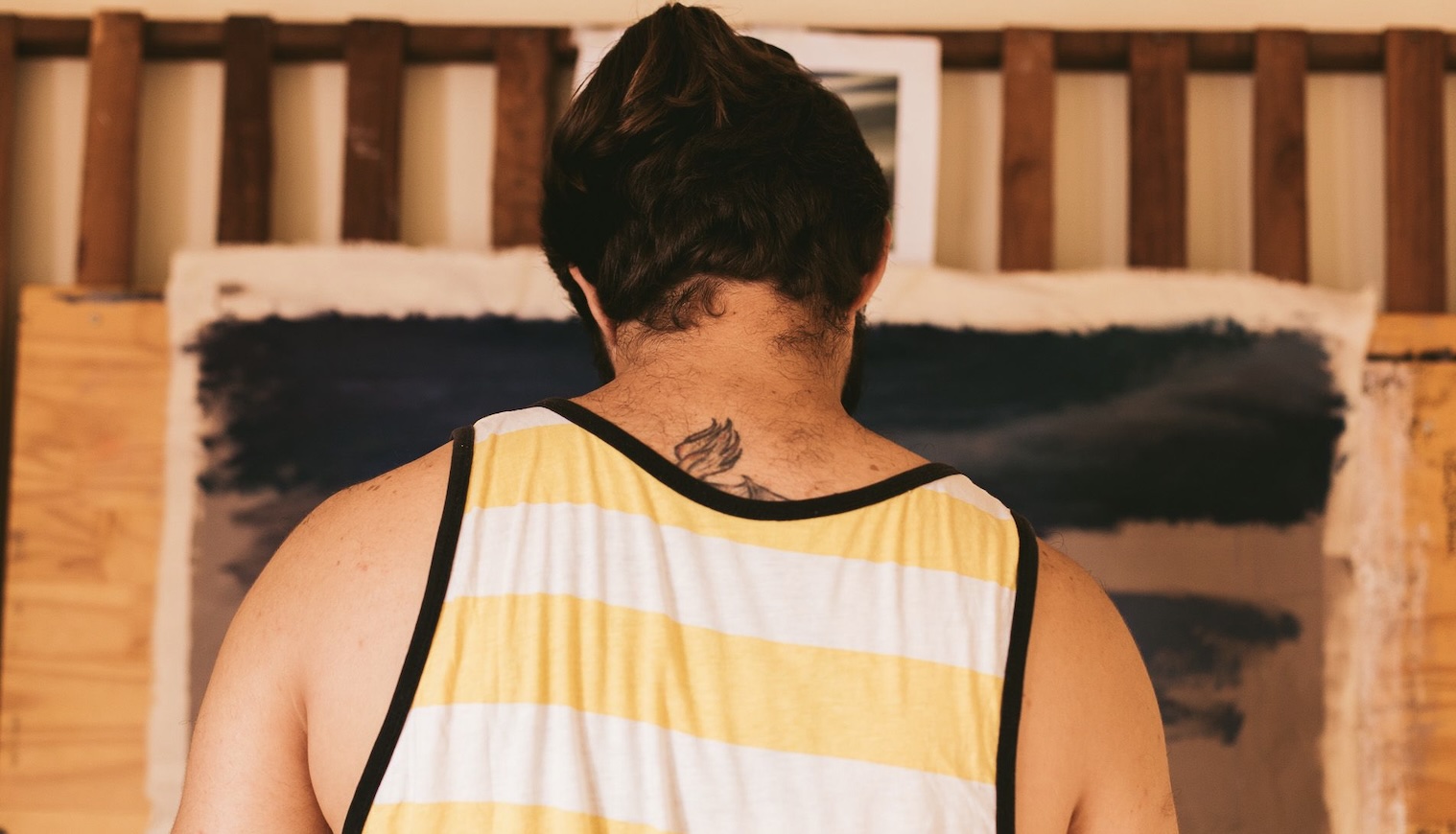
Image courtesy of Pexels.
Enjoying our eggs? Support The Limping Chicken:

The Limping Chicken is the world's most popular Deaf blog, and is edited by Deaf writer and photographer Charlie Swinbourne.
Our posts represent the opinions of blog authors, they do not represent the site's views or those of the site's editor. Posting a blog does not imply agreement with a blog's content. Read our disclaimer here and read our privacy policy here.
Find out how to write for us by clicking here, and how to follow us by clicking here.
This site exists thanks to our supporters. Check them out below:
- Lumo TV: TV programmes in BSL for the Deaf community
- Bellman & Symfon: home alerting solutions, including the mobile phone transceiver!
- SignVideo: Instant BSL video interpreting online
- British Deaf Association: Working to transform the way BSL is accessed in the UK
- 999 BSL: call 999 in an emergency, in BSL
- Deaf Umbrella: Making colleges and workplaces more accessible
- Appa: Looking for RSLIs, TSLIs and CSWs, apply here!
- Signly: Adding BSL to websites
- Signworld: Learn BSL online!
- DCAL: world-class research into deafness, cognition and language
- Lipspeaker UK: specialist lipspeaking support
- BID: Deaf services, including advice and support, interpreting, employment and letters
- Interpreting Matters: BSL interpreting agency
- Sign Solutions: Instant access to Interpreters, training and BSL translation nationwide
- InterpretersLive: On demand BSL video interpretation
- Performance Interpreting: BSL interpreting at concerts
- National Deaf Children's Society: The leading charity for deaf children
- Action Deafness: “A Deaf-Led Charity” – interpreting & community support services




Posted on October 5, 2026 by Rebecca A Withey
0