
If you’ve ever applied for a job and been asked to take an online test — full of patterns, puzzles or logic questions — you might have wondered, ‘was this designed for someone like me?’
Psychometric ability tests are now a common part of the recruitment process in the UK and the world. Employers use them to assess how people solve problems, think logically, and work under pressure. But these tests were developed with hearing people in mind — and hardly any research has been done to understand how Deaf people experience them.
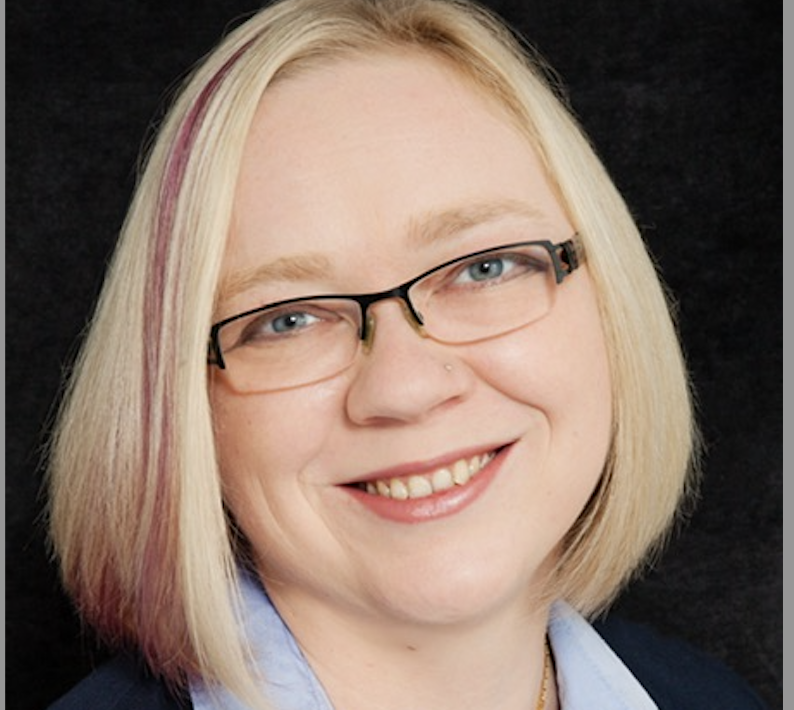
I’m a British Sign Language interpreter based in the East Midlands and currently a PhD student at the University of Wolverhampton. My research, supervised by Dr Danny Hinton and Dr Christopher Stone, explores how Deaf adults interact with psychometric testing in employment settings — and what adjustments, if any, might make these tests more accessible and fair.
This research could help shine a light on an area that’s been overlooked for decades. There is barely any data looking at Deaf people’s experiences of psychometric testing, especially not in work settings. That means employers and test designers are making decisions based on incomplete, outdated information.
I’m currently recruiting Deaf participants for the second part of the project — and that’s where you come in.
Study 2 is a wider research project analysing barriers Deaf people face in psychometric testing.
We’re looking at how Deaf and hearing people perform on the same tests, to explore whether there are differences in performance — and if so, what might explain them.
The goal is to identify potential barriers Deaf people may face during the job application process, especially when tests are not designed with sign language users in mind.
The wider project also includes:
*A review of existing data (Study 1)
*A study on test timing adjustments (Study 3, planned for spring 2026)
*A study exploring the use of live BSL interpreting in testing (Study 4)
If you’re a Deaf person or interpreter based in the Midlands and are interested in taking part in the interpreting study (Study 4), please email me for more information.
For Study 2 we are looking for Deaf participants who are aged 18–65, use BSL or ASL as their main language, live in the UK or the US and have access to a computer – as the test does not work on phones or tablets.
Taking part is straightforward and can be done from home. You’ll be asked to:
- Watch a series of short BSL videos explaining the study and your rights as a participant, or read the participant information
- Fill in a short online survey
- Complete a series of psychometric tests on your computer
There are no follow-up questions after the test, and your answers will be kept anonymous. The full session takes around 60 minutes in total. Everyone who completes all parts of the assessment will be entered into a prize draw to win Amazon vouchers.
Would you like to see what these tests look like? If you’re curious about the types of tests used in this research, you can try some free practice tests here.
If you meet the criteria and want to take part in Study 2 — or are interested in the interpreting study (Study 4) — please do get in touch.
By taking part in this study, you’ll be helping to build evidence about how these tests work — or don’t work — for BSL users. That could lead to better practices, better adjustments, and ultimately a fairer chance for Deaf people when applying for jobs.
This study is part of a wider collaboration taking place in both the UK and the US and so information is available in both BSL and ASL here:
Please feel free to share this with friends, family or community groups. The more Deaf people participate, the stronger the case we can make for change.
The project is kindly supported by SHL, one of the world’s leading publishers of psychometric tests.
By Jenny Koehring
j.koehring@wlv.ac.uk
Jenny Koehring is a BSL/English interpreter based in the East Midlands. She holds a BA (Hons) in Interpreting from the University of Wolverhampton and an MSc in Occupational Psychology. Currently a PhD candidate, her research focuses on the fairness of psychometric ability testing in occupational settings for Deaf test takers.
Enjoying our eggs? Support The Limping Chicken:

The Limping Chicken is the world's most popular Deaf blog, and is edited by Deaf writer and photographer Charlie Swinbourne.
Our posts represent the opinions of blog authors, they do not represent the site's views or those of the site's editor. Posting a blog does not imply agreement with a blog's content. Read our disclaimer here and read our privacy policy here.
Find out how to write for us by clicking here, and how to follow us by clicking here.
This site exists thanks to our supporters. Check them out below:
- Lumo TV: TV programmes in BSL for the Deaf community
- Bellman & Symfon: home alerting solutions, including the mobile phone transceiver!
- SignVideo: Instant BSL video interpreting online
- British Deaf Association: Working to transform the way BSL is accessed in the UK
- 999 BSL: call 999 in an emergency, in BSL
- Deaf Umbrella: Making colleges and workplaces more accessible
- Appa: Looking for RSLIs, TSLIs and CSWs, apply here!
- Signly: Adding BSL to websites
- Signworld: Learn BSL online!
- DCAL: world-class research into deafness, cognition and language
- Lipspeaker UK: specialist lipspeaking support
- BID: Deaf services, including advice and support, interpreting, employment and letters
- Interpreting Matters: BSL interpreting agency
- Sign Solutions: Instant access to Interpreters, training and BSL translation nationwide
- InterpretersLive: On demand BSL video interpretation
- Performance Interpreting: BSL interpreting at concerts
- National Deaf Children's Society: The leading charity for deaf children
- Action Deafness: “A Deaf-Led Charity” – interpreting & community support services





Posted on July 29, 2025 by Rebecca A Withey