
English transcript can be found below this BSL video:
Rebecca: Hello! So today for Limping Chicken I am interviewing two filmmakers, Danny Murphy – did you have a sign name Danny?
Danny: Yes it’s “inquisitive eyebrow”
Rebecca: (repeats the sign) and Samuel Ash –
Samuel: Mine is *chat*
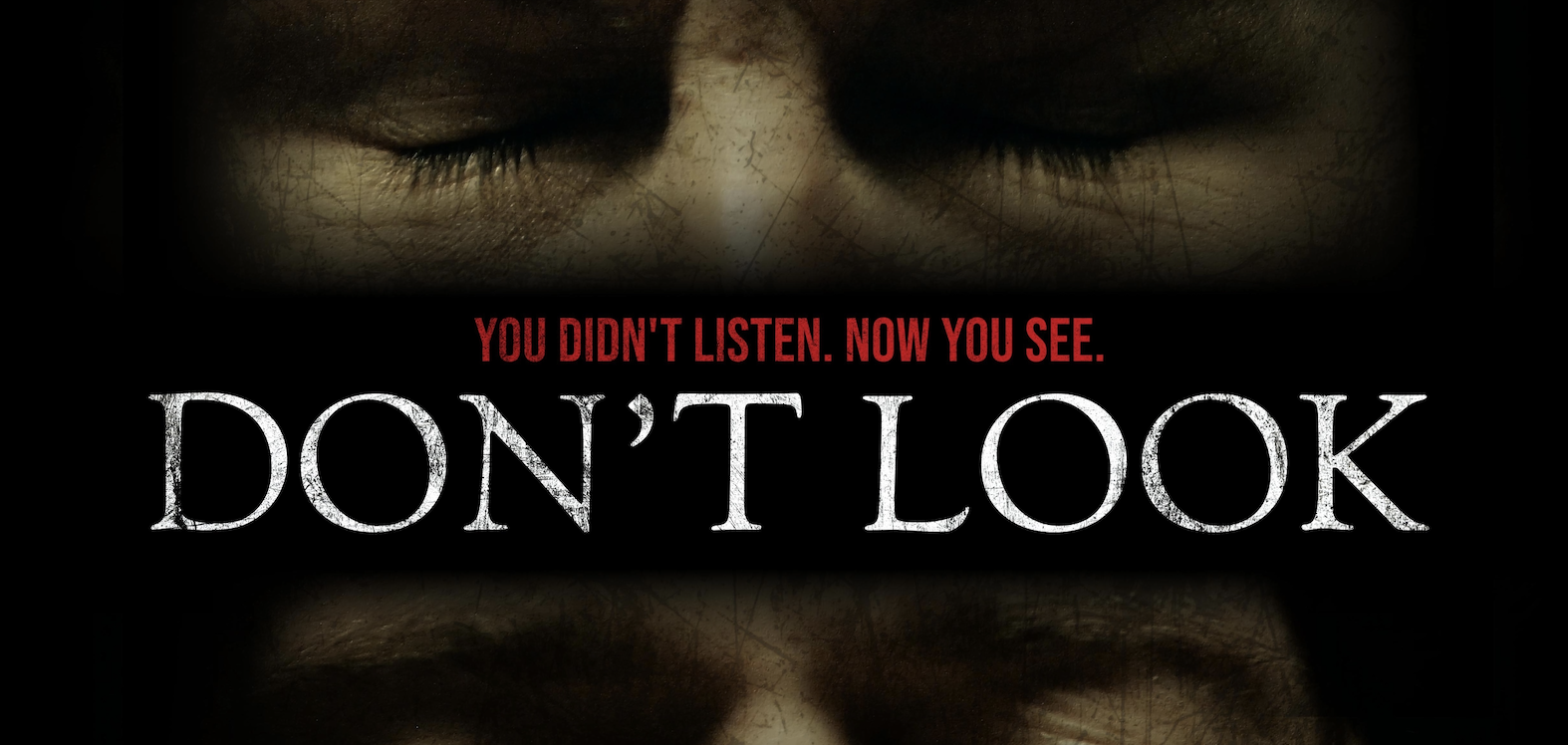
Rebecca: ooh interesting! So Danny and Samuel, we’ve been chatting about your work and the collaboration between you both – you created a short film “Don’t Look.”
You self funded this – which is so interesting and we will go in more detail about this. But could you introduce your role within the film again please? Danny would you like to start?
Danny: Sure. In “Don’t Look” I was the director, executive producer, actor and editor. So I wore lots of caps, so to speak! I worked closely with Samuel throughout.
Samuel: I was the Director of Photography so I was responsible for how the film looks; the lighting, for example. I was also the executive producer. Danny created the overall story and we worked together from there.
Rebecca: that seems like a good balance of different roles between the two of you. What I find really interesting is your decision to self fund, can you explain what the reasons were behind this?
Samuel: Well I initially spoke to Danny as I had a desire to create a short film. We discussed this and decided it could be a collaboration where Danny would direct and I’d be DOP. The story – came from Danny.
Danny: So my idea for the short film, I had originally planned for it to be a feature film. It had been a few years since that idea so when Samuel spoke to me we considered how we could make it work without any funding. We knew it would be a labour of love – a passion project!
There were lots of discussions about how it could work and once we felt confident about the arrangements we went ahead and I’m so happy that we did. It feels so encouraging to be able to show others that deaf people can do it, regardless of funding or not.
Samuel: The reason we decided it had to be self funded, we knew opportunities for funds are quite limited. With funding you also have to wait for approval – the yes or no, whereas without funding we would have full creative control.
We wanted to create this opportunity ourselves and as we both love making films, we knew we would use this as a good experience and starting point. We felt we can’t rely on waiting for limited opportunities to come to us, so we made it happen.
Rebecca: By self funding, I wonder what the main challenges were? Did you feel you had to negotiate in terms of fees for location or actors fees? Was it smooth sailing?
Danny: Well, the location, for example is probably the most important thing to arrange when film making. We were running out of time finding the right location but luckily my partner found the perfect location after posting a search on social media. It turned out to be a place a stones throw from my house! Just a three minute drive away.
When we arrived to test out the location – as we were after an old fashioned look – not a modern one, we all loved it. The owners were incredibly supportive, they didn’t want to charge us a high amount, they were happy to support us so that was a huge help.
All of our actors were volunteers – without payment. A colleague from Waterloo Road was one of the actors, he was really happy to be on board and without payment too. He said how he loved the opportunity to act, it would be a passion project and so we were delighted to get our cast.
Rebecca: Wow. I’m sure there was a lot of planning happening for you. If there are other deaf creatives thinking about self funding a film, what advice would you give them?
Samuel: Remember you can’t do everything by yourself. It’s so important to connect with others, network, build relationships. You need to work with other people.
Danny and I first met on the shoot of Four Deaf Yorkshire Men where I was camera operator and Danny was camera assistant. We got chatting and found we have similar interests and work ethos so we kept in touch. Things like that are so important so networking is really valuable.
Rebecca: So I imagine developing a team is important.
Danny: Yes and networking absolutely. To self fund you need to allocate a lot of time for planning and organising, you can’t just go along with it. I would say self funding requires more hard work that just receiving funding, it’s easier to get funds and budget accordingly whereas we had to work everything out from scratch.
But I would say there is definitely more artistic freedom and creative control. So there are definitely some benefits to self funding.
Rebecca: Looking back is there anything you wished you’d have done differently?
Samuel: ooh, hard question!
(Danny and Samuel ponder this…)
Rebecca: No? Happy?
Samuel: For me, there were naturally ups and downs and challenges with filming complications, there are probably a few things I wish I could’ve done differently.
For example, the shoot was two days long yet at the end of it we had new scenes or parts of the script we wanted to film again. That was a challenge having to reconsider the set up as we filmed in such a controlled space, actors sat at a table with specific lights and ambience.
That was a challenge to achieve – we did it – but looking back I would’ve avoided doing that in future. It’s all a learning process!
Danny: For me I probably would’ve looked at the script again. It was a brilliant script and I loved the development but I would’ve loved to have taken more time, without rushing to look at what we could’ve added or done better. I’m still happy with how it was a good proof of concept and for a starting point too!
Rebecca: Absolutely! It’s better to release creative projects than hold onto them. Have you had any feedback from deaf audiences about the film, or feedback?
Danny: Ah I can’t really answer that yet as the film has been sent to mainstream film festivals (no specific deaf-only screening) so I don’t have that feedback.
My aim is for the film to be received on a mainstream platform – not a deaf only one. We want the film to be proof that deaf creators can be on an even level to hearing creatives.
We’ve had really positive feedback, most have been so surprised we are an all-deaf creative team. We even had one actor who is assumed to be hearing but they are deaf too!
We’ve had some feedback from deaf people internally. A lot of it hugely positive. Some want to add more deaf perspectives into the film but with it being so short it’s difficult to include everything we want.
But there’s been so much positives, it’s really exciting!
Rebecca: And you’re personally happy with the film?
Samuel: oh yes! Just adding to what Danny said. We’ve seen a lot of short films, mostly funded ones – for example from LumoTV. Yet we’ve realised the standard of film we’ve created is still high and we hope this might inspire others to consider self funding.
Some projects may require large funding, others could be easily self funded. But we feel very proud of what we’ve achieved with limited time, funds and resources. Hopefully we will secure funding to expand on this and also look at future projects!
Danny: Going back to your question, I try to stay humble without over hyping what I’ve done. It’s important to remember even though it’s low budget – under two thousand pounds – we had special effects, makeup, achieved what we set out to do. For that, I’m very proud of it. Of course in future if we secure funding there’s lots more we could do!
Rebecca: it’s definitely a huge achievement – you’ve taken action and it will inspire many others. Looking ahead do you have plans for future collaborations or other projects to tell us about?
Danny: We definitely plan to collaborate again. Looking forwards, we are considering even shorter films – perhaps around five minutes in length. Like Samuel mentioned, we would love to develop projects if we secure funding so that’s also something we are thinking about.
We’ve signed off on the feature film length script for Don’t Look so we are ready to pitch this. We are ready for the hard work and intend to keep the deaf creative team at the heart of all developments with Don’t Look.
We’d like to see deaf leaders in writing, directing, DOP, so we will see how this progresses.
Rebecca: Good plan! Samuel?
Samuel: We’ve never really “finished” we still have so much more learning to do but I hope to develop more short films with original ideas, looking at things that haven’t been covered before. Danny and I will explore unique, original ideas going forwards too.
Rebecca: Do you both feel there’s more of a deaf presence in the media, film and TV?
Samuel: I would say more opportunities are arising and doors opening, especially for deaf directors and writers. However I feel behind the cameras, technical opportunities are quite limited. This is my personal view. It’s why I often discuss with Danny that it’s important to build experience, we can’t rely on opportunities being given to us.
I think there’s a tendency in film and TV to play it safe, to work with well known directors for example. But the technical crew tend to get neglected when it comes to providing opportunities for growth and at the moment there aren’t enough deaf people working in this field compared to directing and writing.
I hope to see this improve in future as we really need to see deaf technical crews.
Danny: I’d like to also add that I didn’t realise until I moved to Scotland how few opportunities are here compared to England. It’s natural that filmmakers here would also like Scottish led projects. So one great thing about Don’t Look was that it created opportunities for Scottish based creatives as we filmed here.
I would like others to recognise that and for those individuals to gain opportunities out of it. One person who was involved in the film has just been awarded some funding from Scotland so I’m really excited to see how that progresses.
I’d like to see more opportunities arise for young creatives who have fresh an eyes and new perspectives. Many times I’ve seen young talent but there aren’t opportunities for them, there can be lots of reasons for this. Hopefully we can encourage this and make a change!
Samuel: It’s exciting to see lots of deaf representation on screen – short films, feature films – there’s quite a lot upcoming.
I hope Don’t Look inspires other projects to be Deaf-led, I’m really excited for what the future brings and hope to see lots more.
Rebecca: Thank you both so much for chatting today and good luck with all of your endeavours!
More information on Don’t Look can be found here.
Enjoying our eggs? Support The Limping Chicken:

The Limping Chicken is the world's most popular Deaf blog, and is edited by Deaf writer and photographer Charlie Swinbourne.
Our posts represent the opinions of blog authors, they do not represent the site's views or those of the site's editor. Posting a blog does not imply agreement with a blog's content. Read our disclaimer here and read our privacy policy here.
Find out how to write for us by clicking here, and how to follow us by clicking here.
This site exists thanks to our supporters. Check them out below:
- Lumo TV: TV programmes in BSL for the Deaf community
- Bellman & Symfon: home alerting solutions, including the mobile phone transceiver!
- SignVideo: Instant BSL video interpreting online
- British Deaf Association: Working to transform the way BSL is accessed in the UK
- 999 BSL: call 999 in an emergency, in BSL
- Deaf Umbrella: Making colleges and workplaces more accessible
- Appa: Looking for RSLIs, TSLIs and CSWs, apply here!
- Signly: Adding BSL to websites
- Signworld: Learn BSL online!
- DCAL: world-class research into deafness, cognition and language
- Lipspeaker UK: specialist lipspeaking support
- BID: Deaf services, including advice and support, interpreting, employment and letters
- Interpreting Matters: BSL interpreting agency
- Sign Solutions: Instant access to Interpreters, training and BSL translation nationwide
- InterpretersLive: On demand BSL video interpretation
- Performance Interpreting: BSL interpreting at concerts
- National Deaf Children's Society: The leading charity for deaf children
- Action Deafness: “A Deaf-Led Charity” – interpreting & community support services





Posted on October 2, 2025 by Rebecca A Withey