
I recently joined a free training programme for disabled actors because I wanted to learn new skills. I was unsure about it at first but a valued deaf friend recommended it to me. I’m a deaf performer, and like everyone else trying to break into the industry, I always look out for opportunities that might open a door.
So when my friend told me about this new initiative offering support, connections, and free training for disabled people in the arts, it sounded great. I imagined a space where access would be easy and wouldn’t need explaining and that it would be somewhere I didn’t have to apologise for asking people to slow down or repeat themselves.
But only a short time into the training, I realised something that I was quite surprised by: this ‘disabled world’ didn’t feel like mine.
I’ve spent my whole life navigating environments built for hearing people, and I’m used to being the only deaf person in the room when it comes to education. But stepping into a space labeled “for disabled people,” I expected to at least feel a sense of shared experience.
Instead, I felt even more isolated. Not because anyone was unkind—far from it as everyone was really lovely. The course leaders and other people on the course were warm and passionate about what they do.
But when it came to group discussions or debates or online Zoom meetings, I often felt like the sole person with an interpreter, two steps behind. It felt like we weren’t speaking the same language, literally or culturally.
And that’s when it hit me: deaf culture really is its own world, and it doesn’t fit into the wider “disabled” category in the way people assume it does.
Yes, deaf people are disabled in a way that society dis-ables us from access to things (namely communication!) but we have our own language, culture, humour, and pride that I don’t feel I share with other non-deaf disabled people.
Also, I have deaf friends and they remind me that when I’m with them I’m not ‘disabled’ I’m just me.
In the deaf world, I don’t have to work for access; I don’t have to think about how to keep up; I don’t have to translate myself. My language isn’t a barrier there; it’s the thing that connects us.
Deaf culture has history, humour, inside jokes, social rules, pride, and identity. It’s tied to a language that captures emotion, nuance, and story in a way nothing else can. We have a shared understanding that goes far beyond audiograms or hearing levels or whether we wear hearing aids or cochlear implants.
There’s also another really big thing – community. In many disability circles, there’s solidarity between everyone—but it’s not the same thing as culture. And that distinction matters to me.
What I found in the training was a group of individuals with very different life experiences, different needs, different ways of navigating the world. We were grouped together because society labels us all “disabled,” but we weren’t united by a shared culture or language.
I was still isolated from everyone else. It still felt like me versus them. People spoke quickly. Jokes flew around that I only caught half of. Even when interpreters were provided, I felt like I was watching the world through a window instead of being inside it.
I kept thinking, ‘These people understand in ways I don’t—but they also don’t understand in ways only deaf people do.’ I didn’t feel more included; I just felt differently excluded.
And while I appreciated being welcomed, I realised that ‘disability’ spaces often rely heavily on spoken communication and hearing culture. Many disabled people don’t know sign language—and why would they? It’s not part of their identity.
Deafness, for me, isn’t just “a disability.” It shapes my worldview. It shapes how I express myself, how I tell stories, how I interact with others. It shapes my acting.
And in that training room, surrounded by people with various disabilities, I felt like the odd one out again—not because of lack of effort, but because our worlds are different.
This is the question that’s been echoing in my mind since starting the programme: where do I belong as a deaf actor? The truth is, I didn’t join the course because I felt part of a disability culture—I joined because I’m a deaf actor trying to work in an industry that often refuses to understand my needs.
I joined the course because opportunities for deaf performers are limited, and because the world still sees “deaf” as a subset of “disabled,” whether or not I agree. But the more time I spend in these “inclusive” spaces, the more I realise that inclusion isn’t just about ramps, captions, or interpreters. It’s about cultural understanding.
I’m still grateful for the training. I’ve met wonderful people, learned new techniques, and felt inspired by talent from all walks of life. But I’ve also learned that I don’t have to force myself to identify with a world that isn’t mine. I’m deaf first—not disabled.
Deaf culture is where I feel whole. So maybe I don’t need to “fit” in everywhere else. I’m still a deaf actor trying to break into an industry that doesn’t always see me. But now I know more clearly which world that most feels like me – and that’s with the deaf community and other BSL users.
This blog has been written anonymously as part of the Insight series – created by Assistant editor Rebecca A Withey.
If you have a story, experience or viewpoint you would like to anonymously share please email Rebecca on rebecca@rawithey.com
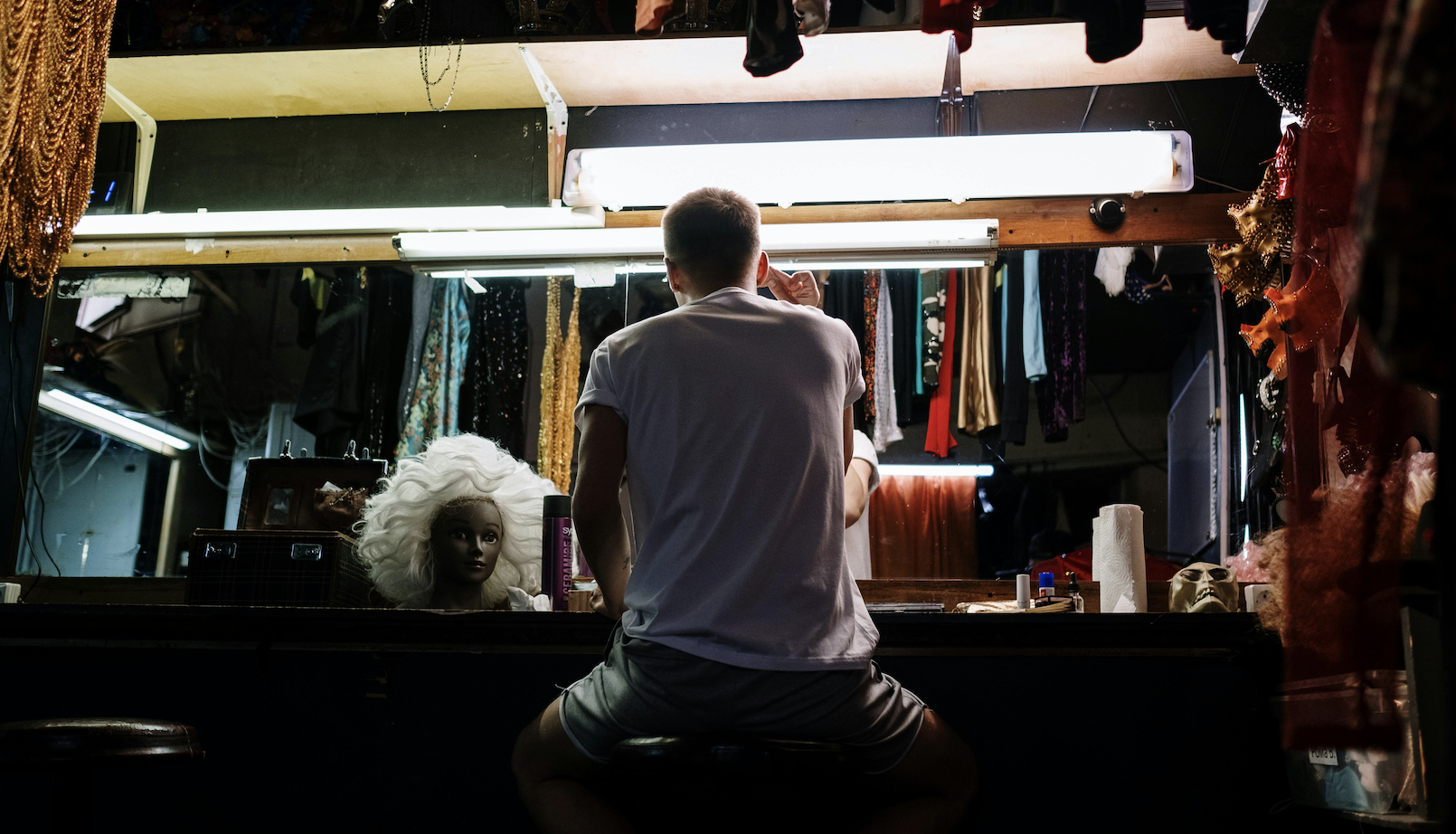
Image courtesy of Pexels.
Enjoying our eggs? Support The Limping Chicken:

The Limping Chicken is the world's most popular Deaf blog, and is edited by Deaf writer and photographer Charlie Swinbourne.
Our posts represent the opinions of blog authors, they do not represent the site's views or those of the site's editor. Posting a blog does not imply agreement with a blog's content. Read our disclaimer here and read our privacy policy here.
Find out how to write for us by clicking here, and how to follow us by clicking here.
This site exists thanks to our supporters. Check them out below:
- Lumo TV: TV programmes in BSL for the Deaf community
- Bellman & Symfon: home alerting solutions, including the mobile phone transceiver!
- SignVideo: Instant BSL video interpreting online
- British Deaf Association: Working to transform the way BSL is accessed in the UK
- 999 BSL: call 999 in an emergency, in BSL
- Deaf Umbrella: Making colleges and workplaces more accessible
- Appa: Looking for RSLIs, TSLIs and CSWs, apply here!
- Signly: Adding BSL to websites
- Signworld: Learn BSL online!
- DCAL: world-class research into deafness, cognition and language
- Lipspeaker UK: specialist lipspeaking support
- BID: Deaf services, including advice and support, interpreting, employment and letters
- Interpreting Matters: BSL interpreting agency
- Sign Solutions: Instant access to Interpreters, training and BSL translation nationwide
- InterpretersLive: On demand BSL video interpretation
- Performance Interpreting: BSL interpreting at concerts
- National Deaf Children's Society: The leading charity for deaf children
- Action Deafness: “A Deaf-Led Charity” – interpreting & community support services




Posted on December 16, 2025 by Rebecca A Withey