
Firstly can you introduce who you are and your role at Nagish?
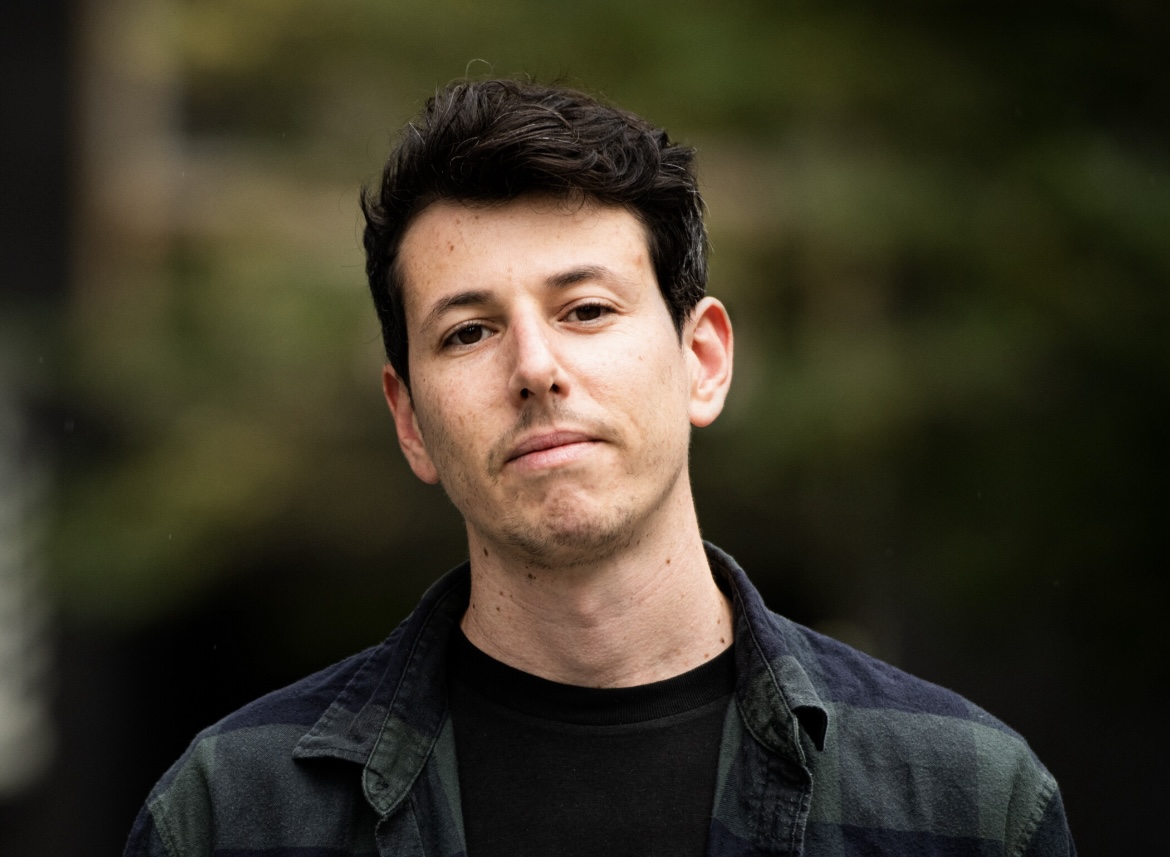
I’m Tomer Aharoni, Co-founder and CEO of Nagish. We started Nagish with one simple goal: to make communication accessible for everyone, including people who are Deaf, DeafBlind, hard-of-hearing, or those with speech disabilities.
Before founding Nagish, I worked in product and engineering. I saw how technology can help bridge communication gaps. That realization really pushed me to think differently about how AI could be used to make the world more inclusive.
Do you have a connection to deafness or sign language? What encouraged you to work in this field?
During my undergraduate studies at Columbia University in New York, I was sitting in class one day when I got a phone call. I couldn’t pick it up because that would have interrupted the entire class. I started thinking, how can you have a phone call if you can’t hear or speak. This thought led to a bigger question: how do deaf and hard-of-hearing people communicate?
The year was 2019, and the deaf community was relying heavily on interpreters and captioning assistants. We (Alon Ezer, my co-founder and I) thought it was crazy, so we started reaching out to folks from the local deaf community, and what we heard was really surprising for us.
“I just hang up when someone calls me”, “I don’t use the phone.”, “I ask my brother to call for me” was just a few of the answers we received when we asked people how they use the phone.
Later that summer, I interned as a software engineer at Bloomberg. On my team, we had another intern who was deaf. Every time I wanted to meet with her, I had to align schedules with her and two interpreters. The casual “let’s jump on a quick call to figure this out” was just impossible.
After talking with HR about it, I learned that finding these two interpreters who were familiar with technical jargon was nearly impossible and that we’re using them whenever they are available, but they are not available full-time.
These experiences, and my growing connections with deaf individuals led me to build the first iteration of Nagish. We have a single belief that hasn’t changed – communication should be private.
Alon and I built a prototype, and the response was incredible. We realized how life-changing Nagish could be. Then COVID hit, and the need exploded as the world went remote, and the lack of accessibility in how people communicate really became apparent.
How do you see AI generated interpretation overcoming barriers around using in-person sign language interpreters?
Sign language interpreters do incredible work. They’re essential for the community, accessibility, and communication. But the reality is, there simply aren’t enough of them. In the U.S., for example, there are over 500,000 people who use American Sign Language as their primary language, and only about 10,000 certified interpreters.
That means a huge number of situations, from doctor visits, parent-teacher meetings, job interviews, and more often lack accessible communication.
Even when interpreters are available, there are challenges around scheduling, cost, and geography. Someone living in a rural area would have a much harder time getting an interpreter, and that delay can have real-world consequences, especially in healthcare or emergency settings.
AI can help bridge that gap. What we’re building isn’t meant to replace interpreters, but to complement their work and make accessibility more scalable. Think of it as a tool that steps in when a human interpreter isn’t available, or that supports interpreters by handling repetitive or lower-stakes interactions so they can focus on situations where human nuance matters most.
Google Translate didn’t replace professional translators, but it made it possible to bridge communication gaps on a day-to-day basis.
With advances in computer vision and natural language processing, AI holds the promise of being able to begin to interpret sign language in real time. This means more people can communicate instantly, whether it’s through a video call, a public kiosk, or an emergency service.
Of course, we’re very aware that language is deeply cultural, especially sign language, which involves facial expression, emotion, and regional variation. That’s why we’re working closely with Deaf linguists and sign language experts to make sure the AI systems are trained with and by the community, not just on their data.
So, while AI interpreters won’t replace human interpreters anytime soon, they can play a huge role in making accessibility more consistent, immediate, and inclusive. It’s about giving people more options, more independence, and fewer missed moments of connection.
Can you run us through the process of how the interpreting process would work – via mobile/tablet/laptop?
Sure, but first let me clarify that we are in the research phase of developing the technology, and we don’t currently have concrete plans to offer it to the public.
What Nagish currently provides is an app on any phone or other connected device that gives users real-time phone call captioning. The app uses artificial intelligence to convert text-to-speech and speech-to-text as a conversation is happening, allowing users to place phone calls on their existing phone number.
Users can place and receive calls directly through the Nagish app by typing and reading, without needing to hear or speak. When a user dials a number in the app, they simply type what they want to say, and Nagish’s AI instantly voices their message to the other caller.
When it comes to Sign Language, our vision is to make it simple and natural, no special equipment, just your device.
You’d open the app, and the camera would capture your signing in real time. Our AI would then translate those signs into spoken or written language almost instantly. When the other person replies, their speech is converted back into sign language using a visual avatar.
Would sign language users be moderating the AI powered communication tools? How would you ensure authenticity and accuracy?
Yes absolutely. Everything we build from day 1 is built with the Deaf community. Many of the people guiding our research, testing our models, and providing feedback are native sign language users and linguists.
Which sign languages would your tools deliver?
We are starting with American Sign Language (ASL) and plan to offer more languages as our research progresses.
Where are you in the development process now?
Community collaboration is at the core of how we’re developing this technology. We’re already working closely with sign language users, interpreters, and linguists to test early versions, gather feedback, and refine the AI’s accuracy and naturalness.
How do you anticipate this tool will be received by sign language users worldwide?
We expect a mix of excitement, curiosity, and probably some hesitation, which is exactly how it should be. The Deaf community is very thoughtful about new technology and rightfully so. They’ve heard so many over-promises in the past, and we’re trying to avoid that. We’re prioritizing progress over perfection, which takes time – but our end goal is perfection.
Our goal isn’t to replace human interpreters or existing communication methods, but to add another option, a tool that makes accessibility more consistent and available anywhere, anytime. For many, it could mean being able to communicate independently in moments where an interpreter isn’t accessible.
We’re taking a community-first approach to make sure the technology feels authentic, accurate, and respectful. As long as we keep building with sign language users, we believe this will be received as an empowering step forward.
What do you hope Nagish achieves in ten years time?
Ten years from now, Nagish Sign will allow anyone to participate in day-to-day activities and conversations. The applications are limitless.
I’d love to see a world where Deaf and hard-of-hearing individuals can join any conversation, anywhere, whether it’s a video call, a classroom lecture, a doctor’s appointment, or a Yoga class, and have instant, accurate sign language support.
If, ten years from now, we’ve built a platform that helps millions communicate freely in their own language, and that was shaped hand-in-hand with the Deaf community, then I’d say we’ve succeeded.
To find out more, see Nagish’s website here.
You can also find Nagish on Instagram.
Enjoying our eggs? Support The Limping Chicken:

The Limping Chicken is the world's most popular Deaf blog, and is edited by Deaf writer and photographer Charlie Swinbourne.
Our posts represent the opinions of blog authors, they do not represent the site's views or those of the site's editor. Posting a blog does not imply agreement with a blog's content. Read our disclaimer here and read our privacy policy here.
Find out how to write for us by clicking here, and how to follow us by clicking here.
This site exists thanks to our supporters. Check them out below:
- Lumo TV: TV programmes in BSL for the Deaf community
- Bellman & Symfon: home alerting solutions, including the mobile phone transceiver!
- SignVideo: Instant BSL video interpreting online
- British Deaf Association: Working to transform the way BSL is accessed in the UK
- 999 BSL: call 999 in an emergency, in BSL
- Deaf Umbrella: Making colleges and workplaces more accessible
- Appa: Looking for RSLIs, TSLIs and CSWs, apply here!
- Signly: Adding BSL to websites
- Signworld: Learn BSL online!
- DCAL: world-class research into deafness, cognition and language
- Lipspeaker UK: specialist lipspeaking support
- BID: Deaf services, including advice and support, interpreting, employment and letters
- Interpreting Matters: BSL interpreting agency
- Sign Solutions: Instant access to Interpreters, training and BSL translation nationwide
- InterpretersLive: On demand BSL video interpretation
- Performance Interpreting: BSL interpreting at concerts
- National Deaf Children's Society: The leading charity for deaf children
- Action Deafness: “A Deaf-Led Charity” – interpreting & community support services




Posted on December 12, 2025 by Rebecca A Withey