
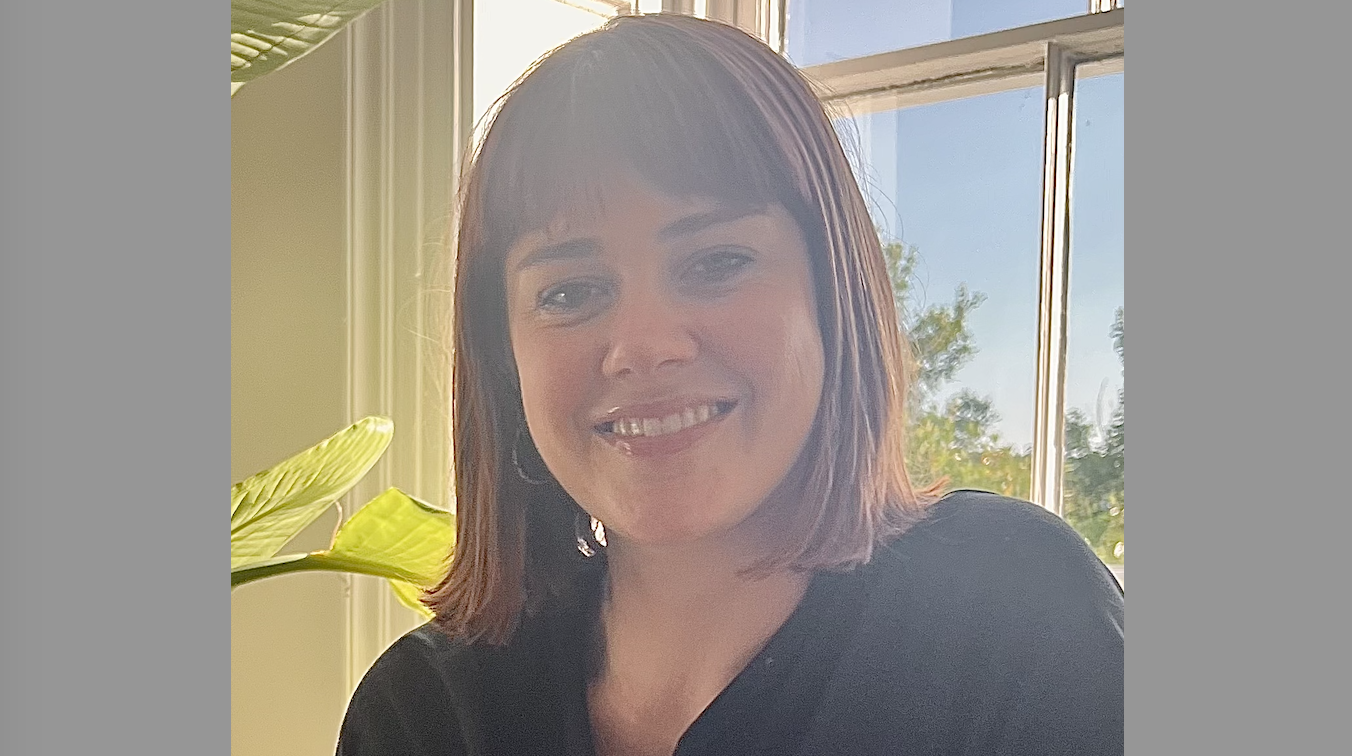
Hello everyone! My name is Anna, and I’m a coach working with Deaf and Disabled people, and parents/carers of Deaf and Disabled children.
I know that the term ‘coach’ can feel unclear, so in this blog I would like to explain who I am and what I do.
So first of all, who am I? I was born deaf and grew up oral, without a strong deaf identity. I started learning BSL around thirteen years ago, when I was in my 20s, and I found my deaf identity along the way. I loved learning British Sign Language so much that I completed Level 6!
I have worked in the Disability sector for over 20 years, with roles ranging from support work to managing employment services. I’ve helped Disabled people find jobs and I’ve also worked with employers to make sure the right support is in place. I always aim to make sure people know their rights and can advocate for themselves.
After having my son four years ago, I trained as a Life Coach as I decided I wanted to make coaching accessible for the Deaf community. I completed my qualification last summer with Optimus Coach Academy, graduating with the experience and skills to be an effective coach.
So, what is coaching, you may ask?
Coaching is a two-way conversation between the coach (me) and the client. The client will have something they want to change in their life, and coaching helps them work out how to make that change. Coaching helps people:
- Understand what they want
- Make decisions
- Build confidence
- Set boundaries
My job as the coach is to ask questions, and the client finds their own answers.
I can explain to you now what coaching is NOT:
Coaching is not therapy. We focus on where you are now and where you want to go. If you need to explore the past or work through trauma, I can signpost you to appropriate therapy. You don’t need a mental health condition or diagnosis to come to coaching – it is for everyone.
If you are wondering how coaching can be useful for Deaf people -many of us spend a lot of time adapting to systems that were not designed with us in mind. In work, education, and society, Deaf people are often expected to explain their needs, educate others, or stay quiet.
Over time, this can affect confidence and be exhausting. My online Deaf-aware coaching offers a space where you do not have to explain or prove yourself. Communication is accessible, and your lived experience is respected. Deaf-aware coaching is about creating space to think, reflect, and move forward in a way that feels right.
Why do people come to coaching?
People come to coaching for many reasons: work, relationships, health, or other areas like finances and personal goals. At work, people might want to go for a promotion, handle challenges with
colleagues, or build confidence.
In relationships, people might want to reconnect with a partner, improve family relationships, or simply explore ways to communicate better.
For health and wellbeing, people might want to feel fitter, reduce stress, or build routines that support long-term wellbeing.
Coaching gives space to focus on what matters most and work out practical steps to get there, at your own pace.
I’d love to share a story from a former Deaf client. We met every two weeks for six sessions, and she made some incredible transformations.
“It was brilliant to talk to a life coach who was deaf. Anna naturally understood my communication needs, which were tailored to my preferences in English and BSL.
More than that, she could recognise that there was sometimes an extra layer holding me back: the barriers that come with being deaf and navigating a hearing work environment. No hearing life coach could have identified these issues so well and helped me to address them.
We worked on short-term, medium- and long-term changes and aspirations, from simple breathing exercises to prevent stress and panic, to leaning into my thought patterns and ways of working to achieve my goals.
I started to see results straight away. I feel much calmer, more resilient, and capable of achieving more. I don’t think I would have seen results so quickly with a hearing life coach: they would only have seen half the picture and not the whole me.”
With all clients, whether Deaf or Disabled, I take a person-centred approach. I respect choices, go at the person’s pace, and make sure communication is accessible, whether spoken, BSL or SSE. Visual tools can be very helpful, and I have a range I can bring into sessions.
I work with one-to-one clients over at least six sessions, because that’s where change really starts to happen. I am also developing a series of online workshops for Deaf mothers, launching this spring.
Thank you for reading this and I hope you found this introduction to coaching interesting. If you want to find out more, you can book a 30 min Zoom call with me –
https://calendly.com/astorm7997/30min.
Anna Storm is a deaf qualified Life Coach, offering one-to-one coaching and workshops in BSL, SSE and spoken English.
Enjoying our eggs? Support The Limping Chicken:

The Limping Chicken is the world's most popular Deaf blog, and is edited by Deaf writer and photographer Charlie Swinbourne.
Our posts represent the opinions of blog authors, they do not represent the site's views or those of the site's editor. Posting a blog does not imply agreement with a blog's content. Read our disclaimer here and read our privacy policy here.
Find out how to write for us by clicking here, and how to follow us by clicking here.
This site exists thanks to our supporters. Check them out below:
- Lumo TV: TV programmes in BSL for the Deaf community
- Bellman & Symfon: home alerting solutions, including the mobile phone transceiver!
- SignVideo: Instant BSL video interpreting online
- British Deaf Association: Working to transform the way BSL is accessed in the UK
- 999 BSL: call 999 in an emergency, in BSL
- Deaf Umbrella: Making colleges and workplaces more accessible
- Appa: Looking for RSLIs, TSLIs and CSWs, apply here!
- Signly: Adding BSL to websites
- Signworld: Learn BSL online!
- DCAL: world-class research into deafness, cognition and language
- Lipspeaker UK: specialist lipspeaking support
- BID: Deaf services, including advice and support, interpreting, employment and letters
- Interpreting Matters: BSL interpreting agency
- Sign Solutions: Instant access to Interpreters, training and BSL translation nationwide
- InterpretersLive: On demand BSL video interpretation
- Performance Interpreting: BSL interpreting at concerts
- National Deaf Children's Society: The leading charity for deaf children
- Action Deafness: “A Deaf-Led Charity” – interpreting & community support services




Posted on February 17, 2026 by Rebecca A Withey