
Musical theatre is often celebrated as an inclusive art form—one that combines movement, storytelling, and music to create powerful shared experiences. Yet, behind the scenes, many of its systems are still designed primarily for hearing performers.
As a deaf dancer and actor based in London, I want to share my recent audition experience to highlight how accessibility, or the lack of it, can significantly impact Deaf and disabled performers.
This year, I attended my first audition since 2023. My previous audition had taken place in Berlin, where I was offered a one-year contract. I completed that contract and returned to London in July 2024, immediately stepping back into rehearsals, small projects, and touring work.
After two years away from the audition circuit, I decided to join Spotlight—a platform widely used by performers to find casting opportunities.
While browsing, I came across an audition for an upcoming musical. I hesitated. The breakdown mentioned singing, and I am not a singer. I am deaf. Musical theatre has long been known as a space dominated by hearing performers, so I questioned whether this audition was truly meant for someone like me. Encouraged by my partner, I applied anyway. I thought, What have I got to lose?
A few weeks later, I received an email inviting me to audition. I felt genuinely pleased—not because I expected to book the job, but because it was an opportunity to ease myself back into auditioning. I told myself there was no pressure. I would simply show up, enjoy the process, and treat it as practice.
On the day of the audition, I arrived an hour and a half early. I was the second person there. I changed into comfortable clothes, stretched, and prepared my body. As more dancers arrived, the waiting area became increasingly busy and loud.
The person managing the sign-in list called out names verbally. With multiple conversations happening at once, the noise level made it impossible to hear clearly or lip-read accurately. I wasn’t sure if my name had been called, so I approached him and pointed out that my photo hadn’t been ticked. “That’s me,” I said.
We were then taken into the studio. The director introduced himself, followed by the choreographer, but I didn’t understand their verbal introductions. There was no interpreter present, and once the choreographer began demonstrating the movement physically, I was able to follow without issue. Movement is my language, and I picked up the choreography quickly and confidently.
However, when the music started, it was very fast, and I had to adapt immediately without clear cues. Later, the director began calling out individual names. I stood there feeling completely lost.
The only sound I could hear was a loud ticking noise. I eventually realised they were using the original soundtrack, where singers hear a clock sound through their ear monitors to help them stay in time. That ticking completely drowned out the director’s voice for me.
When my name was called, I didn’t hear it. The ticking sound was all I could perceive. In that moment, I wondered if the creative team had even realised there was a deaf performer in the room among hearing dancers—despite the fact that my Spotlight profile clearly states that I am deaf.
This was my first musical theatre audition in a room full of hearing performers, and it made something painfully clear: the process was not built with access in mind. There was no interpreter present, no adjustments to communication, and no consideration of how Deaf performers might receive information equally. Without access, auditioning for a musical becomes not just difficult, but exhausting—and almost impossible to enjoy.
As a Deaf performer, the constant need to adapt, anticipate, and process information in inaccessible environments takes a physical and mental toll. Access should not be an afterthought or something a performer has to repeatedly ask for. Whether in auditions, rehearsals, or performances, proper support allows Deaf and disabled artists to focus on what they are actually there to do: perform.
Despite the challenges, this experience was a learning curve. I am glad I went, because it allowed me to see the reality of the process for myself. But I also hope that by sharing this experience, it encourages casting teams, directors, and producers to rethink how auditions are structured.
True inclusion means designing spaces where Deaf performers are not simply present, but supported from the very beginning. Hopefully, in the future, we will see more D/deaf performers in musical theatre—not as exceptions, but as an expected and valued part of the industry.
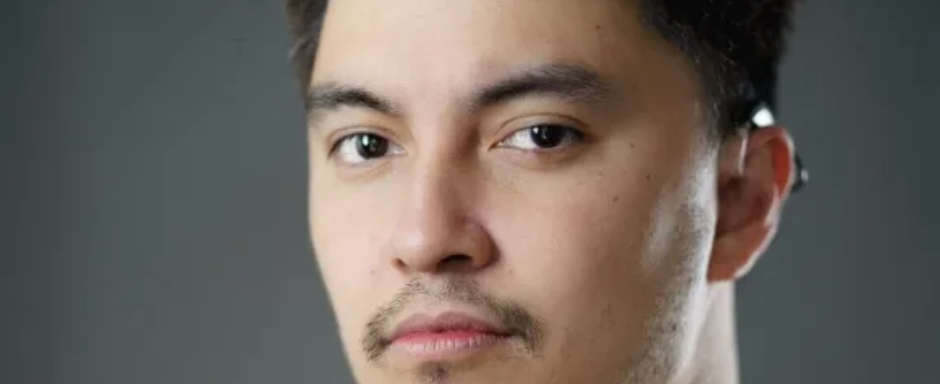
By Hearns Sebuado
Enjoying our eggs? Support The Limping Chicken:

The Limping Chicken is the world's most popular Deaf blog, and is edited by Deaf writer and photographer Charlie Swinbourne.
Our posts represent the opinions of blog authors, they do not represent the site's views or those of the site's editor. Posting a blog does not imply agreement with a blog's content. Read our disclaimer here and read our privacy policy here.
Find out how to write for us by clicking here, and how to follow us by clicking here.
This site exists thanks to our supporters. Check them out below:
- Lumo TV: TV programmes in BSL for the Deaf community
- Bellman & Symfon: home alerting solutions, including the mobile phone transceiver!
- SignVideo: Instant BSL video interpreting online
- British Deaf Association: Working to transform the way BSL is accessed in the UK
- 999 BSL: call 999 in an emergency, in BSL
- Deaf Umbrella: Making colleges and workplaces more accessible
- Appa: Looking for RSLIs, TSLIs and CSWs, apply here!
- Signly: Adding BSL to websites
- Signworld: Learn BSL online!
- DCAL: world-class research into deafness, cognition and language
- Lipspeaker UK: specialist lipspeaking support
- BID: Deaf services, including advice and support, interpreting, employment and letters
- Interpreting Matters: BSL interpreting agency
- Sign Solutions: Instant access to Interpreters, training and BSL translation nationwide
- InterpretersLive: On demand BSL video interpretation
- Performance Interpreting: BSL interpreting at concerts
- National Deaf Children's Society: The leading charity for deaf children
- Action Deafness: “A Deaf-Led Charity” – interpreting & community support services




Posted on February 13, 2026 by Rebecca A Withey